Posts

Revolutionizing Data Monitoring with Remote Sensors and Wireless Technology

Introduction In the era of rapidly advancing technology, data monitoring has become an integral part of various industries, including manufacturing, agriculture, and logistics. The use of wireless thermometer sensors, wireless vibration sensors, and wifi tags has transformed the way businesses gather, analyze, and manage data. This blog post will explore the benefits of these innovative devices and their impact on modern industries. Remote Thermometer Sensors: Enhancing Temperature Monitoring WiFi Temperature monitoring is critical in various industries, including healthcare, food storage, and manufacturing. Thermometer sensors have revolutionized temperature data collection, allowing businesses to monitor temperatures in real-time and from virtually anywhere. These devices provide numerous benefits: Accurate and Reliable Data: These sensors ensure precise measurements, helping businesses maintain optimal conditions for their products or processes. Real-time Alerts: When temperature...

The 6 Key Components of Warehouse Temperature Monitoring Systems

Image
In the past few years, it has become common for healthcare institutions and the manufacturing industry to use electronic temperature control systems for safeguarding their products and satisfying regulatory guidelines. So, if you are a warehouse manager, you already know how warehouse temperature monitoring equipment can streamline processes in a warehouse. But in case you are unsure which monitoring system is the best for warehouses, you should learn a bit about the significant parts present in temperature monitors.  Consider the Following Factors When Purchasing a Temperature Monitoring System: 1. Temperature Sensor - From a wireless temperature sensor to a Wifi Vibration Sensor – temperature monitoring equipment uses various kinds of sensors to get exact measurements.  2. Measurement Device - The measurement device is the heart of the system. They are of several kinds. It can be a wireless measurement device or a standalone device or a networked measurement device. 3. Th...

The Internet of Things Has Given Birth to Smart Agriculture

Image
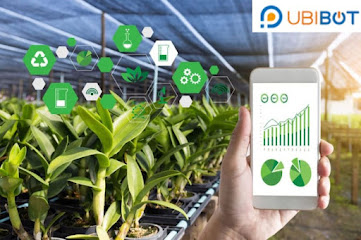
The Internet of Things has transformed the agriculture sector for good. Smart farming is a type of farming that relies on information and communication technology to upgrade farming practices. The Internet of Things , cloud computing, and innovative technologies have inspired tremendous growth in the agricultural sector. Artificial intelligence and the use of Wireless Tags and robots have revolutionized the farming industry. Here’s how IoT has brightened the future of the agriculture sector: IoT Based Smart Agriculture is all about offering assistance to people dealing with crop production. Farmers can have access to real-time data on soil temperature, humidity, moisture present in the soil, water level, etc. With such effective environment monitoring even from a remote location, they can increase the quality of the food grains, vegetables, and fruits. There are various modern devices like a Remote Thermometer Sensor and moisture sensor to check various environmental conditions and gua...

Is It Time to Switch to IoT-Enabled Wireless Environmental Sensors?

  The primary job of   IoT Environmental Sensors   is to keep track of the environmental conditions in an indoor environment. They can monitor a range of conditions such as air quality, humidity levels, temperature, noise, barometric pressure, and ambient light in an indoor space. Why do industries invest in technologies like a   Wireless Vibration Sensor ? Three reasons to use Wireless Vibration Sensors Cost-effectiveness – If you consider the long-term benefits, you will realize that the IoT environmental sensor is a smart investment. You also won’t have to spend much money on its maintenance. Waterproof-  It is essential for wireless sensors to be waterproof. Make sure the one you purchase is resistant to water so that it doesn’t get damaged soon. In addition, many of these devices are also dustproof. Ease of operation-  Installing environmental sensors doesn’t take much time when done by trained professionals. Once installed, you will be able to operate...

How Important are Wireless Industrial Sensors?

Image
Thanks to the Industrial IoT (Internet of Things), all types of industries around the globe have upgraded themselves. Wireless technology offers industries the ease of enjoying no-wires communications. From manufacturing lines to oil refineries, purpose-built industrial wireless sensors have applications in various kinds of industrial settings. The networking requirements of devices used in industries are different from the applications used in the consumer world. What are the key requirements specific to wireless sensor networks used in industries?  1. Security and Reliability- In consumer applications, cost is the most essential system attribute. But for industrial applications, security, and reliability are two major attributes. If you consider the profitability of the company, the efficiency and quality with which they manufacture goods make it mandatory for them to ensure the safety of all workers. Therefore, security and reliability are crucial for wireless sensor networks ...

Are Wireless Sensors the Future of Workplace Management?

Image
With the invention of wireless vibration sensors, the way business operations took place across nations has changed. They are cost-effective, can be installed in a few minutes, and are easy to maintain. So, what is a wireless sensor? What are its basic types? How does it better the lives of employers and employees?  Wireless Sensor: Meaning A wireless vibration sensor is one of the latest technologies that sends prompt alerts to users on various conditions such as temperature, humidity, etc. Whether the temperature in a room fluctuates or the humidity levels soar up – these sensors do a great job monitoring even minute changes and sending notifications at the earliest.  Various Types of Wireless Sensors 1. Door Sensor- Door sensors are essential for commercial and residential spaces. Once they are installed, they improve the safety and security of the building by notifying the owner each time someone opens or closes a door. 2. Water Sensor- A water sensor’s job is to save pe...

How Does IoT Enable Innovation in the Hospitality Industry?

Image
As professionals in the field of IoT keep innovating creative novel smart building systems, there will be more applications available across a range of industries. And as installing and operating IoT technology becomes simpler and more cost-effective, smart buildings are the future.  Many sectors have already started adopting IoT solutions to create smart buildings. Healthcare, education, real estate, agriculture, and retail are some examples of such industries. Warehouse Temperature Monitoring has also become easier because of IoT. There are many opportunities for advancements in the hospitality sector as well, thanks to IoT. Smart hotels are gradually increasing and both guests, as well as hotel operators, can reap the benefits.  What Defines a Smart Hotel? A smart hotel relies on IoT Environmental Sensors for streamlining hotel management and creating a satisfactory guest experience. Guests can take advantage of greater comfort and convenience, and hotel managers can save ...